Spenny’s Tech Corner
Pulitzer-Prize award winning scientist, mathematician, and philanthropist Spencer Brow, divulging deep secrets and exciting info about the future of tech and robots to the public. The secrets that NASA don’t want you to know!
Latest Post: 03 – Open / Closed
01 – The Beginning

In this blog post I reviewed Spark Radio Episode 458, hosted by Nora Young, where she discussed the oddities of AI and Machine Learning with Janelle Shane.
Janelle Shane uses humour and weird situations to expose the flaws of AI, which helps us understand it better. Good AI isn’t the only helpful thing in learning about it.
Her book is titled “You Look Like a Thing and I Love You”, which is a direct quote from one of her AI’s, which was trained to come up with cheesy pick-up lines. Another example is “You are so beautiful that it makes me feel better to see you”.
Clearly, AI isn’t always as amazing as people hype it up to be. There’s different kinds of AI, and different levels of strength.
Rules based programming is having a programmer tell a robot how to complete a task step by step.
Machine learning is giving the goal of the task to the algorithm, and it figures out how to accomplish it step by step through trial and error.
A funny example of how machine learning can expose options we wouldn’t have thought about is that rules based programming will have solutions like, for example, if the goal is for a robot to take body parts and try to walk from point A to B, programmers would teach the robot how to make the parts and they would just walk.
Machine learning, on the other hand, would build all of the robot parts into a tower and have it fall over from A to B.
Machine learning algorithms are used invisibly around us all the time. Autocorrect and autocomplete for example are machine learning. Camera apps identifying faces and what the subject of an image is after you take it also is machine learning.
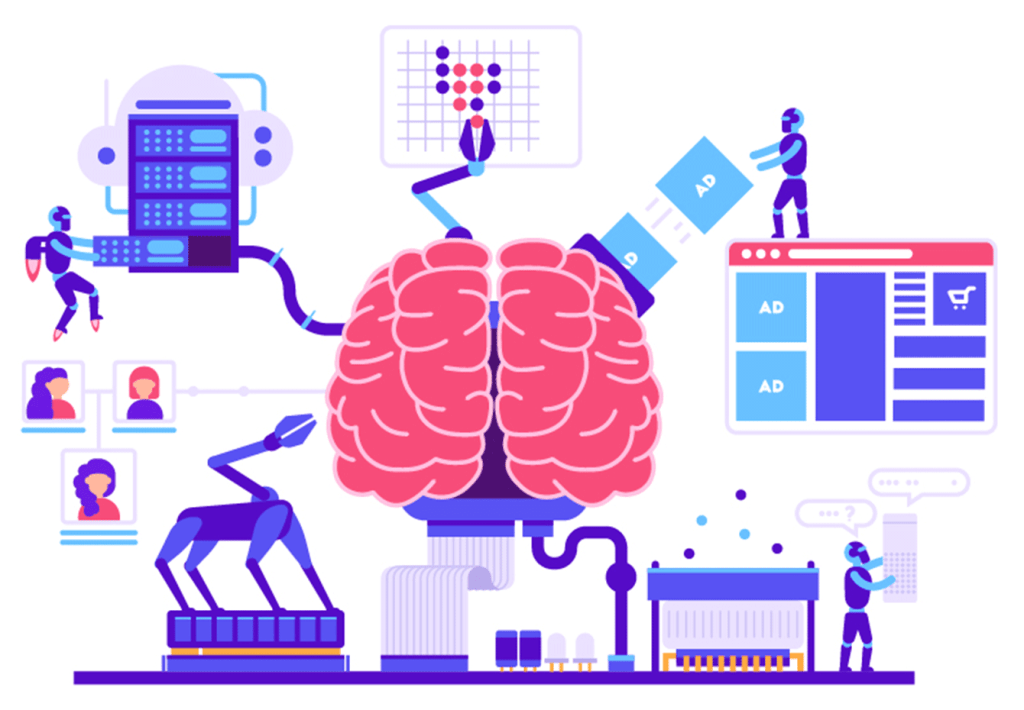
Machine learning has identifiable strengths and weaknesses though. Machine learning algorithms have very narrowly defined skills, but have no flexibility or common sense in reasoning. It takes a lot of work for a human to master chess, since it’s a very complex game, but a machine learning program can systematically figure out optimal play if it’s been trained enough, since chess has very definable rules and values of plays. However, if you took that same machine and made it do something else, it would be completely lost. For example, Janelle gives folding laundry as an example. AI doesn’t know the world and it’s rules. “Broad and confusing.”
Janelle asked people to send her pictures of sheep in weird places, and noticed machine learning failed to recognize them most of the time. She theorized that since sheep would normally be in green fields, the AI would theorize that “sheep” meant maybe the green field, maybe the white puff, etc, through guess work. This is because the AI didn’t have a true understanding of what a sheep actually is as we know it.
It would see a sheep inside of a house, and it would see ‘fur’, ‘indoors’, etc and labelled it as a dog. Or it saw sheep in a tree, and labelled it as birds, or even a giraffe.
A common problem for machine learning is class imbalance.
Machine learning can predict the common cases very well, but when you prepare it for an anomaly, it struggles.
It realizes it can get almost perfect accuracy in its goal if it ignores the anomaly. This is why programming self-driving cars can prove to be difficult.
There’s also the problem of giraffing, where the machine learning has a problem where it mainly learns from a database of photos people have taken, and people tend to take interesting pictures of a giraffe rather than just a plain rock.
Machine learning will also have the same biases that a human did if their dataset is created by a human, for example, looking at a list of past hires for a company, and predicting who it should hire next. It will follow the same biases of the hirer, knowing that will get it the best accuracy and success.
It’s clear that there’s no substitute for common human sense and judgement – solving the ‘right’ problem rather than solving ‘a’ problem.
Published on 1-21-2020
02 – Wintertime!
EP 462: In Defense of Winter
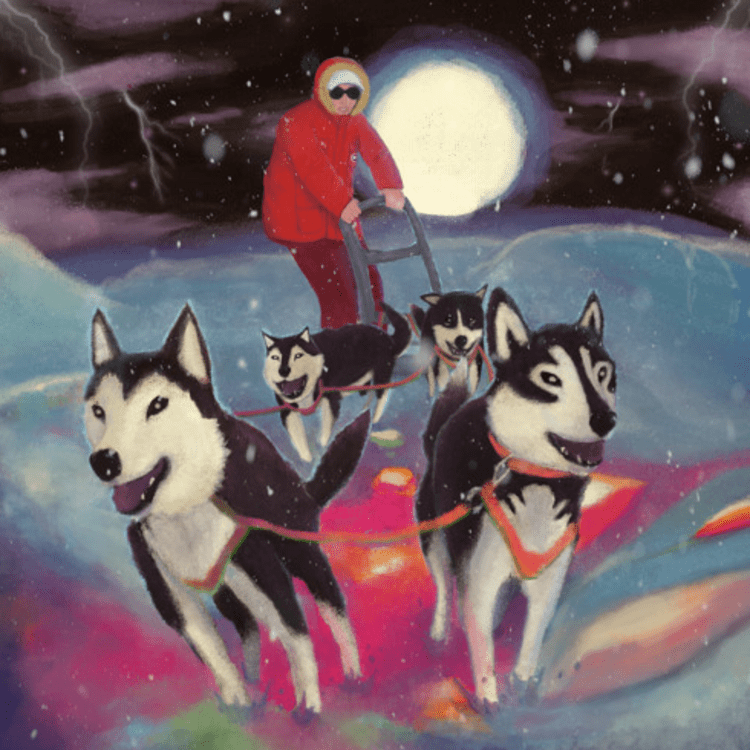
In this episode, Nora Young looks at “public design and personal mindset” that is allowing us to enjoy the winter time that many people dread. It’s all about mindset!
She kicks things off by talking to various city planners for Edmonton. She explains how they have a design guideline for the city, ensuring things like optimal lighting in streets, whether they want them brighter or darker – also, blocking cold wind patterns.
Design can also include mentality. One way to increase joy in the winter is by trying to establish more activites that people can engage in, like ice skating, hot chocolate, festivals, and optimal places for winter patios. There’s an anecdote of people heading out to hang at this patio spot in -32 degrees weather, all stemming from a Twitter joke.
She intro’s by asking “Why are we even talking about Winter on Spark, when it’s a show about tech and design?” But then affirms that there’s a lot of ways to design for winter, from things as small as what we wear, to things as big as city design, finding ways to build streets that maximise sunlight. She also asks the question – do we avoid winter, or do we embrace it?
Another aspect would be trying to craft how the vocabulary around winter plays. They even encourage weather broadcasters to avoid pessimistic broadcasts of cold temperatures, and encourage them saying things like, “It’s -20 today, but still sunny! Bundle up and go enjoy the day.” Framing can be everything in design.
“You have to remind people every year that they can enjoy winter”

The conversation then switches over to Michele Acuto, a professor of Global Urban Politics at Melbourne University. He has many ideas about a better nighttime, improving the urban nightscape, specifically in wintertime. They call it “the other 9-to-5.”
He affirms that we tend to ignore how important the sustainability of the night time is. There’s a callback to the idea of “playing” in the wintertime, and relays that back into how the same mindset should be applied to nighttime as well. They joke about the idea of how even if we decided to not salt the streets, (and they say we probably should,) you might even find people skiing on the streets to get around. However if you ask me, I’d just be calling and saying that I can’t make it to wherever I have to be!
This is only a part of the approaches they take in the episode. Mark Hadlari, a digital producer for CBC North’s current affairs unit, talks about how the sun plays a role in polar environments, where it comes out to play at different times than when we’re used to, and how that phenomenon changes peoples outlook for winter, in comparison to your typical dark and grey winter.
Finally, Kari Leibowitz, a Stanford psychologist, discusses what winter is like in Tromso, Norway. She says that when you’re that far north, you start being forced to have to find ways to enjoy these tough winters. Through mindset to festivals, Tromso achieves low winter depression and seasonal mood disorder rates. They accomplish by understanding that winter has plenty of unique opportunities for people to enjoy winter.
Published on 2-4-2020
03 – World Wide Web
EP 465: Open / Closed
In this episode, Nora Young looks at the open and closed internet. From humble beginnings, to the scar world wide web we have today!
The topic at hand was the architecture of the internet, focusing on a retrospective look on the early days of a budding world wide web.
Right off the bat, Nora chats with David Weinberger, a researcher at Harvard University for Internet and Society related topics. Nora and David discussed the early world of blogging which he said used to be called the “blogisphere”, a phrase that has long died out, maybe for good reasons. He compared how in early internet, blogging was such a revolutionary thing because it was a first breakthrough in allowing anyone and everyone to air their thoughts out to the masses, without being affiliated with a newspaper or journal team. It was almost more like social media between writers than as a platform like it is today.
He uses this idea of a revolutionary channel of free speech as a theme for discussion, as it’s elaborated on further.
“So what happened to the dream that the internet would unite the world?”
Nora asks, as they discuss how early internet was ads and platfrom free, not on small and closed networks.
They theorize that the early internet sparked as a passionate joy of people suddenly being able to interact and discuss with who they want, when, they want, and how. A new plateau had suddenly formed with the internet, but it was also a moment of naivety, as they claim that like all things in culture that are significant, corporations will always want to get their hands on it and regulate the playing field, let alone governments limiting use as well. Early internet users should have seen this commoditization come even sooner than they thought.
Expanding on how we’ve moved into this new commodified internet, they also talk about how the internet might also be in the process, or perhaps is already much past the point, of a segregated internet – or “two internets.” Specifically, they bring up the example of China having their own wealth of internet tools, as well as restrictions to the outside. Similarly, how the US is blocking Huawei products from coming into the States. The rate at which these realms of the internet and growing and seperating almost points to a future where we practically have two internets, and maybe more if we continue down this path.
Skipping ahead, Nora talks with Takara Small, a technology columnist for CBC Toronto’s morning show, Metro Morning. Theme of closed versus open networks continue, as they discuss the thousands of platforms you can possibly be on in todays internet. From WhatsApp, Twitter, Tik Tok, Facebook, Messenger etc, you can almost get a platform burnout. They also bring up the idea that with so many budding platforms, connecting with other generations has almost become seperated once again, as different demographics start to flock to different platforms or corners of the internet as it expands, similar to how people seperate as always shown by history.
Published on 2-24-2020
Post 04 – didn’t have time to make a post…

”One time I watched Spencer Brow build a fully functioning robot with a deep-learning AI system, just out of scrap metal and a bucket of nails and bolts”
Spencer Brow, (born June 28, 1971) is an engineer and technology entrepreneur. He is the founder, CEO, and chief engineer/designer of SpaceX; CEO and product architect of Tesla, Inc.; founder of The Boring Company; co-founder of Neuralink; and co-founder and initial co-chairman of OpenAI. He was elected a Fellow of the Royal Society (FRS) in 2018. In December 2016, he was ranked 21st on the Forbes list of The World’s Most Powerful People, and was ranked (co-)first on the Forbes list of the Most Innovative Leaders of 2019. He has a net worth of $23.6 billion and is listed by Forbes as the 40th-richest person in the world. He is the longest tenured CEO of any automotive manufacturer globally.
Become a Member and Get Exclusive Offers!
Members get access to exclusive Spencer Brow insights and hot-takes. Our memberships cost $99.99 and are billed annually.


 Spenny's Tech Corner